40 years together
Forty years ago, Portugal joined the European Union – a milestone that transformed both the country and our Union.
EU membership marked the completion of Portugal's journey towards democracy and opened a new chapter of prosperity and development. It helped modernise the Portuguese economy, build vital infrastructure and improve education, health and living standards. Over these four decades, Portugal has become an open, competitive and outward-looking country.
The European Union has made Portugal stronger. And Portugal has made our Union better.

How Portugal has changed the EU
With Portugal at its core, the European Union is a stronger community built on trust, progress and solidarity. Portugal has played a key role in strengthening Europe’s cohesion and global reach, helping to define the Lisbon Treaty, and bringing new energy to our partnerships with Africa and Latin America. Its unwavering commitment to European values - democracy, solidarity and social justice - continues to inspire the European project.
How EU membership has changed Portugal
More facts and figures
- People in Portugal have experienced the benefits of greater economic growth in their lives, with employment rising from 4 million jobs in 1986 to 4.8 million in 2024.
- EU membership has deepened Portugal's trade links worldwide. Global goods export grew from €2.8 billion in 1986 (7.3% of GDP) to €21.6 billion in 2024 (7.6% of GDP).
- Since 1986, Portuguese researchers have received nearly €3 billion in Horizon Europe funding, enabling more than 7,000 Portuguese researchers to carry out projects with direct benefits for citizens across Europe.
Success stories
 Building greener energy storage systems
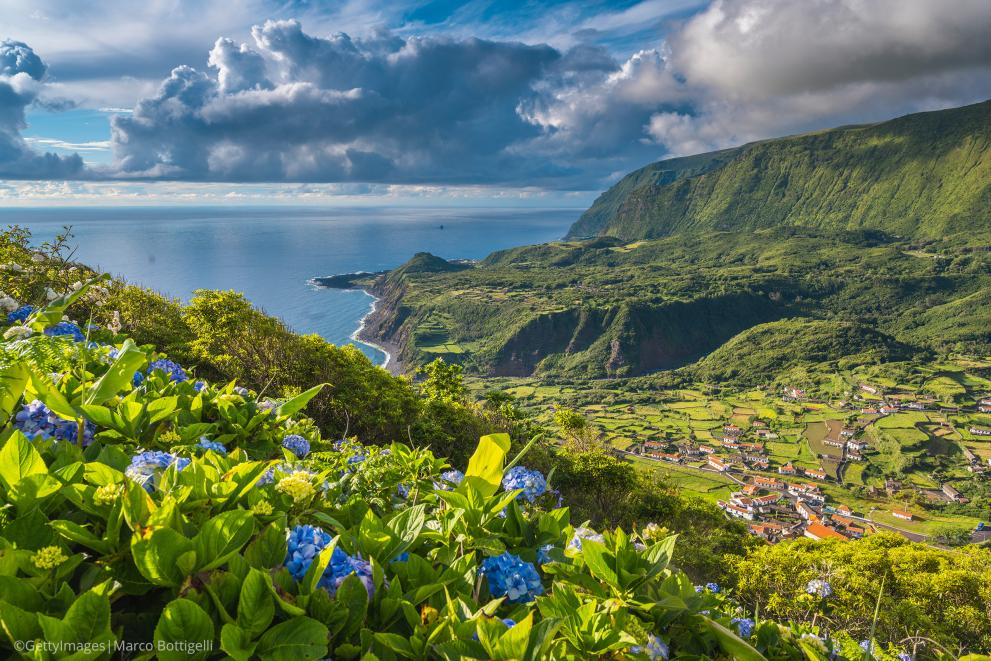
Thanks to EU support, the Azores are stepping up their use of renewable energy by building new energy storage systems on the largest islands. These facilities allow the region to store extra clean energy (solar and wind), so it can be used when demand is high or production is low. It is a big step towards making the islands more self-sufficient and sustainable. The project also showcases the importance of innovation, local stakeholder engagement, and alignment with EU climate targets.
 Innovative solutions for reducing plastic pollution
Through the SeaFilm Project, Portugal’s Polytechnic University of Leiria is developing a new way to package frozen fish using edible, biodegradable film made from algae and seaweed extracts. The goal is to replace single-use plastic film with a more sustainable alternative that preserves quality for longer. This is a promising initiative, which Portugal is leading to combat plastic pollution in Europe.
 Connecting Europe
Since 2007, the EU has helped fund over 350 transport projects across Portugal, including high-speed rail links with Spain. Major investments like the Lisbon-Porto high-speed line or the Bergara-San Sebastian-Bayonne railway section of the Atlantic Corridor, which connects Portugal, Spain, France and Germany, are making travel faster, greener and more efficient. Recently, the European Commission approved plans to complete a Madrid-Lisbon high-speed connection - this will be completed by 2034.
 Portuguese solidarity in action
Portugal has closely worked with other EU Member States to mobilise emergency relief through the Civil Protection Mechanism since its establishment in 2001. Since 2016, Portugal has activated the mechanism 14 times, particularly during recent forest fire seasons. In September 2024, several EU countries sent a total of 11 firefighting planes to assist Portugal.
This page was last updated on 18 December 2025