
This information is also available in: Ukrainian | українська | Russian | русский
Background
Since the beginning of Russia’s full-scale invasion of Ukraine in 2022, more than 20,500 Ukrainian children have been unlawfully deported and forcibly transferred to Russia and the temporarily occupied territories. Many have been forced to change their identity, placed for adoption and given the aggressor’s citizenship. Despite international efforts, just over 2,100 children have so far been returned to Ukraine. The fate of tens of thousands more Ukrainian children is unknown: they remain trapped, threatened and forced to deny their identities. The European Union is committed to ensuring that every Ukrainian child that was unlawfully taken by Russia returns home.
About the high-level meeting
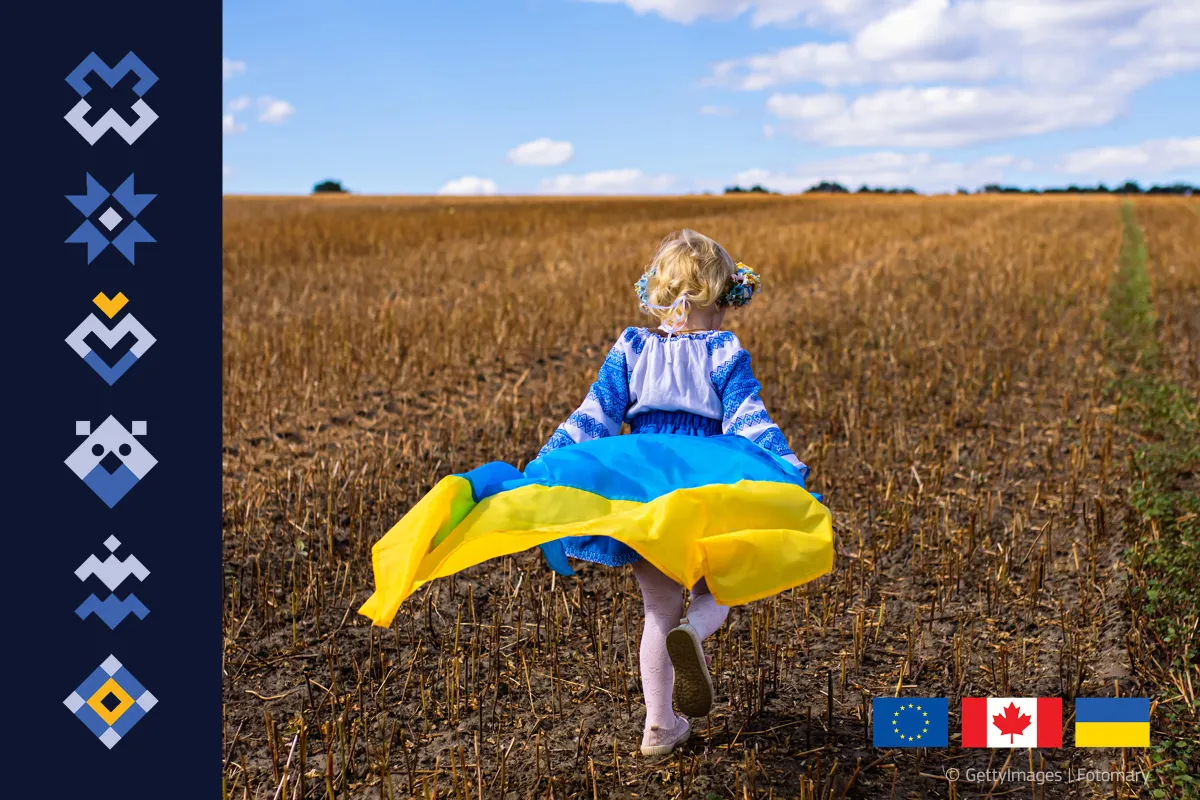
As announced by President von der Leyen in the 2025 State of the Union Address, the representatives of the European Union, Ukraine, Canada and international partners met on 11 May 2026, in Brussels, for the high-level meeting of the International Coalition for the Return of Ukrainian Children. The participants reaffirmed a shared commitment to:
- stepping up action for securing the return of every Ukrainian child forcibly transferred or deported by Russia, and
- ensuring full accountability for these crimes
The European Union will also mobilise additional €50 million to strengthen Ukraine’s child protection system and support the efforts to deliver on the commitments made at the high-level meeting.

Home again: Sasha's story
Sasha was only 11 years old when the Russians attacked. He and his mother sought refuge in a basement in their town of Mariupol.
Russian soldiers stormed the city and took Sasha away from his mother. He was told he would have a Russian mother, a Russian passport, and a Russian name. They sent him to occupied Donetsk. But Sasha didn't give up.
On a stop on the way, he asked to borrow a stranger's phone. He called his grandmother, Liudmyla, who was living in free Ukraine.
Liudmyla moved mountains to get to him. With the help of the Ukrainian government, she travelled to Poland, Lithuania, Latvia, Russia, and finally into occupied Ukraine. She got Sasha back.
There are many more Ukrainian children who remain under Russian control. We must do everything in our power to bring them home.
What the EU has already done for Ukrainian children
Supporting Ukrainian children as one of the most vulnerable groups has been a key part of the EU’s assistance to Ukraine, including
€100 million dedicated to support safe access to education
more than 380 school buses donated
1.5 million textbooks delivered
€65 million provided for school meals
In EU Member States, the EU is also funding projects through civil society partners and UN agencies that benefit Ukrainian refugee children, promoting social inclusion, education and mental health.
The EU has imposed hard-hitting sanctions on more than 60 individuals complicit in the forced deportation, transfer, indoctrination and re-education of Ukrainian children.
The EU has provided €12 million through UNICEF to the 'Better Care' reform aiming at deinstitutionalisation of care of children, establishment of family- and community-based care solutions and access to trauma-informed care for children.