
The European flag is one of the most recognised symbols in Europe and around the world.
For over 40 years, the flag has inspired millions of people across the continent to come together and work towards common goals.
Our flag symbolises the values of unity, peace, democracy and solidarity. It also represents our shared identity forged by centuries of conflict and division, and the opportunities and common future that lie ahead.
Nowadays, the European flag is also at the heart of the Commission’s visual identity, with the famous flag appearing at the centre of its official logo.

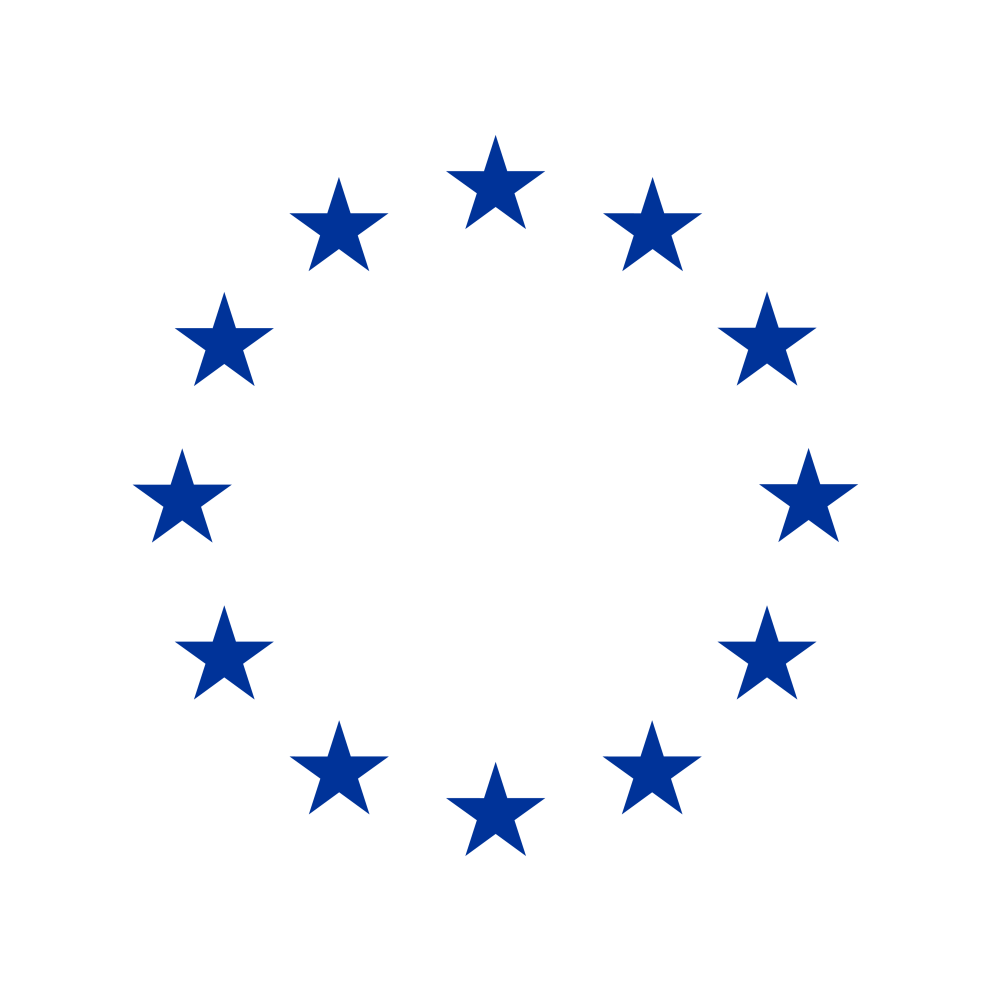


A brief history of the European flag
What would become the European flag, started out being used as the flag of the Council of Europe in 1955. Three decades later in 1985, the European institutions choose to adopt this same flag as the flag of Europe. On 29 May 1986, the European flag would be raised for the first time outside the Berlaymont building in Brussels, the European Commission’s headquarters.
Forty years later, the European flag continues to carry the aspirations of millions of Europeans for a continent united in peace, prosperity, and respect for human dignity. Let’s keep flying it with pride.
- December 1955
The Council of Europe, an international human rights organisation separate from the EU, adopts the flag as its official emblem.
- April 1983
The European Parliament proposes to adopt the flag for the European Communities, which would later become the EU.
- June 1985
The European Council adopts the European flag design for the European Communities, with the official status of a logo.
- May 1986
The European flag is first raised outside the Berlaymont building, seat of the European Commission in Brussels.
- January 2002
The euro starts circulating as banknotes and coins in 12 EU countries. The flag appears on euro banknotes as a symbol of European identity.
- November 2015
A commemorative euro coin is issued to mark 30 years since the flag was adopted by the EU.
"Let the colours of Europe float and may this blue and gold flag be for all its citizens the symbol of hope constantly nourished by our ideal and our fight."
Jacques Delors, President of the European Commission, speaking at the flag-raising ceremony on 29 May 1986
Where to spot the flag today
In your daily life, you come across the flag in many places:
- in front of town halls, government buildings, EU institutions, bodies and agencies, universities, public squares, and diplomatic representations
- on one of the many projects and initiatives that the EU supports, or aid provided in times of need or disaster – in EU countries and around the world
- on your passport and the euro notes in your wallet
- at international sports competitions such as the tennis Laver Cup, the golf Ryder Cup, the UEFA Champions League or the Paris 2024 Olympic Games
- outside the European Union, where many people raise it for what it represents. From Ukraine in 2014, to Georgia in 2024, many people have been bravely holding up the flag in the desire to bring their nations closer to the European project.

Inauguration of the European flagThe European Flag being brought by a group of youths for the hoisting ceremony 

Open day 2026 promotional photosChildren participating in the EU Open Doors Day 2026 

Open Doors Day at the European Institutions 2026General view of visitors touring the exterior stands 

Romania joining the Schengen area - CalafatView of the border crossing point between Bulgaria and Romania in Calafat 

Kids holding Ukraine and EU flagsKids holding Ukraine and EU flags 

The Berlaymont Building and European FlagsEuropean flags fluttering in front of the Berlaymont Building 

Europe Day sport celebrations in ItalyEurope Day celebrations during an Italian football league (Serie A) match 

Paris Olympics - Eiffel Tower with EU flagParis Olympics - Eiffel Tower with EU flag 

Installation of the banner 'Democracy, protect what matters' on the front of the Berlaymont buildingView of the new banner on the Berlaymont building 

European pet passportA dog holding its European pet passport 

Open Doors Day at the European InstitutionsFlag throwers in front of the European Commission building 

Tbilisi, capital of GeorgiaA man walking down a street adorned with graffiti featuring the flags of the European Union and Georgia 

The EU’s response to the explosion in BeirutECHO team member visiting the port area which was heavily damaged in the blast 

Participation of the Members of the College in the plenary session of the European Parliament General view of the European Parliament hemicycle


This page was last reviewed on 3 June 2026