Citizens' Dialogue with Commissioner Vytenis Andriukaitis
You can watch it here
- Friday 25 January 2019, 11:30 - 13:00 (EET)
- Vilnius, Lithuania
- Live streaming available
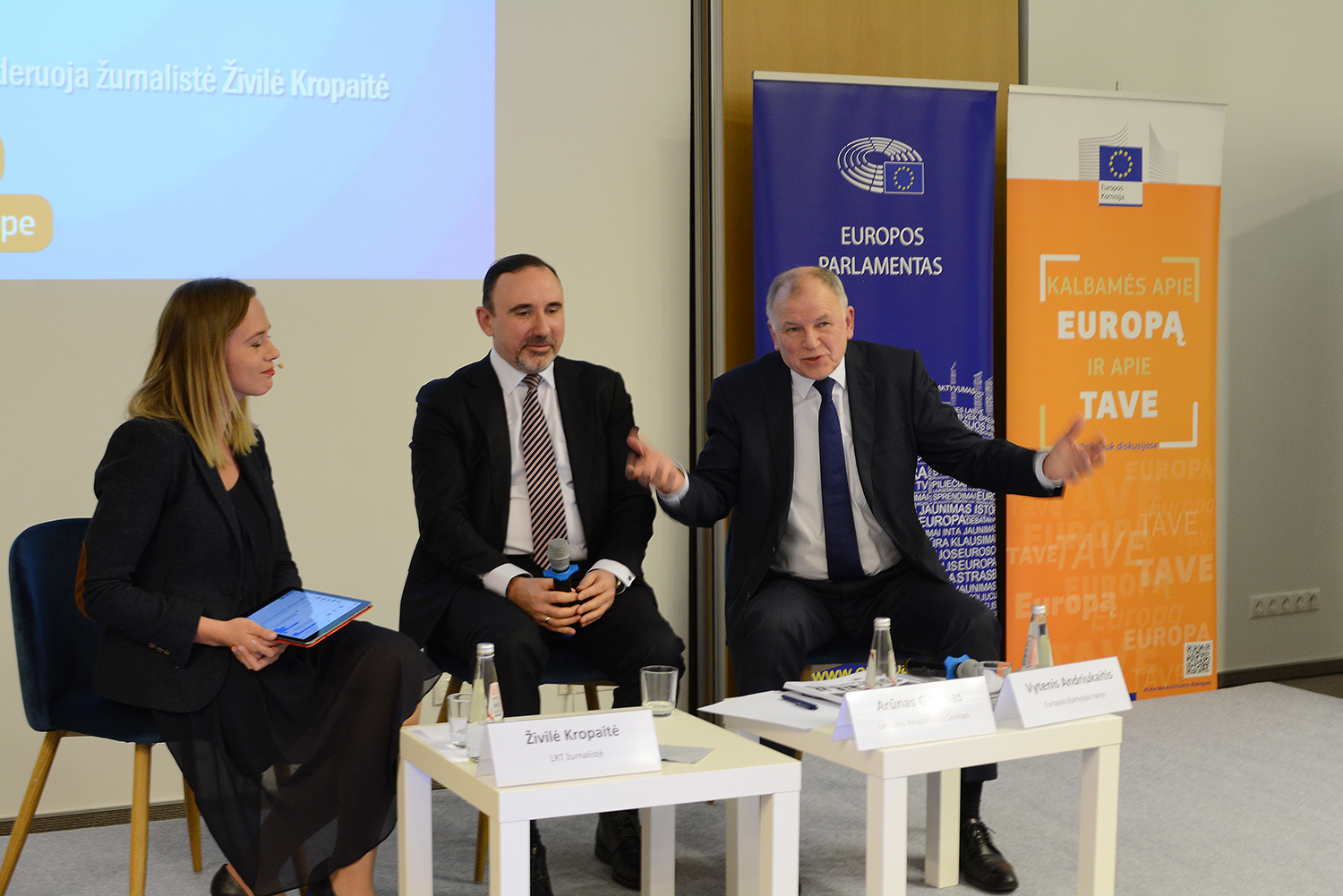
Speakers
Practical information
- When
- Friday 25 January 2019, 11:30 - 13:00 (EET)
- Where
- Vilnius, Lithuania
Report
The Dialogue began with a discussion of the reasons for the low turnout for the European elections in Lithuania in 2014. Commissioner Andriukaitis noted that Citizens' Dialogues can be a catalyst for discussions on tough issues that could in turn lead to more people becoming interested in the EU and coming to vote.
Using Sli.do, audience members were invited to list the issues they thought the EU should focus on. One of the leading issues was security, and Commissioner Andriukaitis agreed that the EU faces many complex security issues such as the continuing problems with migration across the Mediterranean.
He then moved the discussion to problems of youth employment, social issues and emphasised the importance of investing in social infrastructure to tackle poverty and inequality in the EU. Arūnas Gelūnas, Vice-Chair of the European Affairs Committee of the Seimas (Parliament), who shared the stage with the Commissioner, spoke about the difference of education quality in the poor regions and the high level education in expensive schools.
This leads to students becoming more susceptible to fake news and more prone to radical views. An audience member asked the panellists what they thought about the idea of EU federalisation.
Commissioner Andriukaitis said that it does not make sense to compare the EU to the US federal model, for example, given that the EU is unique and is fundamentally driven by the Member States. Such discussions in his opinion should focus more on constructive debates on what kind of EU we want rather than unrealistic images of a federal-type union.
Continuing the topic of EU integration, Commissioner Andriukaitis also spoke about EU defence issues and said that closer EU integration in defence should not be seen as conflicting with NATO and is in fact important to make EU defence more efficient.
'Talking about defence, it is extremely difficult to have an effective reaction mechanism in the EU, we need a system that would allow for swift mobilisation when required.‘
More generally, Commissioner Andriukaitis was clear that Lithuania should not close itself off but rather be open to further cooperation with its EU partners on issues such as health, using the example of cross-border healthcare services. He spoke about the need to harmonise solutions to healthcare issues across the EU, for example adopting legislation on health technology assessment.