
- data collection | data science | open data | public data | artificial intelligence | big data | digital technology
- Tuesday 1 July 2025, 08:00 - 10:00 (CEST)
- Belgium
Practical information
- When
- Tuesday 1 July 2025, 08:00 - 10:00 (CEST)
- Where
- BrusselsBelgium
- Languages
- English
- Part of
Description
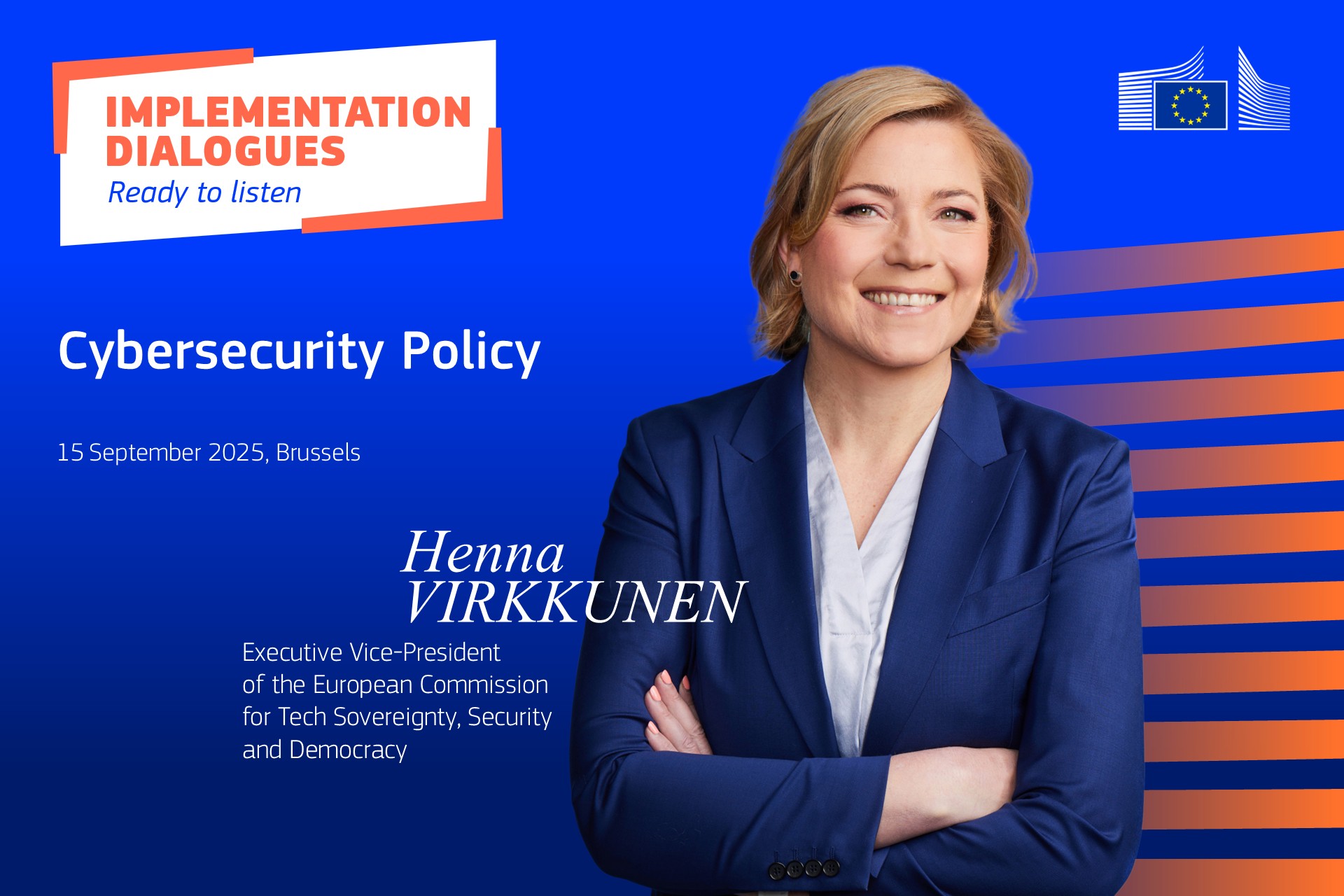
Executive Vice President Henna Virkkunen held an Implementation Dialogue on Data Policy on 1 July 2025 in Brussels. Participants included a broad range of stakeholders, including innovative SMEs in the data economy, providers of public sector data, key European companies in the automotive and mobility sectors, operators of data spaces, leading European tech scale-ups, consumer protection and trade associations.
This exchange gathered feedback on obstacles to the implementation of EU data rules, with a view to identifying solutions to streamline and simplify the existing framework. The input from this high-level discussion will contribute to the preparations of the digital package on simplification planned for later this year. Relevant feedback will also inform the European Data Union Strategy.
Summary Conclusions
There was broad consensus on the importance of improving access to data to foster innovation, avoid duplication of the data and reports requested by companies and create new business opportunities. Participants acknowledged that the EU has strong foundational data regulations. Representatives of both SMEs and larger companies welcomed horizontal legislation such as the Data Act in laying uniform rules and reducing legal complexity.
At the same time, they highlighted a few implementation challenges. Stakeholders emphasised that fragmented enforcement across the EU and overlapping digital legislation create complexity. Industry representatives underlined that they face issues related to interoperability and quality of data. They stressed the importance of transparency, clearly defined access rights for internet-of-things data, the need for incentives to use existing data intermediation mechanisms, and for having better access to public sector data. Regulatory support and sandboxes were mentioned as tools to allow, in particular smaller companies, to better navigate different regulatory regimes.
Executive Vice-President Henna Virkkunen emphasised her commitment to supporting companies - especially SMEs - in complying with data legislation in a practical and proportionate manner, and to providing clear guidance in close cooperation with national authorities. She thanked participants for sharing their views and invited them to also contribute to the public consultation on the Data Union Strategy. Building on these inputs, the Commission will work to improve and simplify the current legal framework to unlock the full potential of the European data economy.
Participants
Aindo SpA (AINDO)
Anysolution SL (ANYSOL)
Association pour l’intermédiation de données (AID)
Bureau Européen des Unions de Consommateurs (BEUC)
Bayerische Motoren Werke Aktiengesellschaft (BMW AG)
Maa- ja metsätaloustuottajain Keskusliitto / Central Union of Agricultural Producers and Forest Owners of Finland (MTK)
DataSpace Europe Oy
Dawex Systems SAS (DAWEX)
Forseti SAS (doing business as Doctrine)
Elastic NV (ELASTIC)
EnBW Energie Baden-Württemberg Aktiengesellschaft (EnBW AG)
EuroGeographics AISBL(EuroGeographics)
European DIGITAL SME Alliance aisbl (DIGITAL SME)
Zentralverband des deutschen Handwerks / Federation of German companies in the Arts and Crafts sector (ZDH)
Innopay International B.V. (INNOPAY)
Insurance Europe AISBL (Insurance Europe)
Deutsche Lufthansa AG (Lufthansa)
Mistral AI SAS (Mistral)
Mobivia SA (Mobivia)
Quantitative Imaging Biomarkers In Medicine (QUIBIM)
Centraal Bureau voor de Statistiek / Statistics Netherlands (CBS)
Tilde SIA (TILDE)
Aktiebolaget Volvo (AB Volvo)