
1st prize Vienna, Austria
2,005,760 inhabitants

Vienna, Austria’s capital, spans 415 km² and offers a diverse cityscape that ranges from the historic city centre, a UNESCO World Heritage Site, to vibrant modern districts and expansive green spaces. Home to more than 2 million inhabitants, Vienna is renowned for its high quality of life and has earned the title of the world’s most liveable city multiple times. Accessibility and inclusion are at the heart of the city’s policies, ensuring that all people, regardless of ability, can participate fully in urban life.
Receiving the Access City Award 2025 is a significant recognition of the City of Vienna’s longstanding commitment to improving the quality of life for all residents. It is proof that our efforts as the Vienna city government to implement accessibility in all areas of life have been successful. Vienna has repeatedly been named the world’s most liveable city for good reason. This award motivates us to continue on this inclusive path and to make Vienna even more attractive for all Viennese.
Dr Michael Ludwig, Mayor and Governor of Vienna
Public transport: a model of accessibility
Vienna’s public transport system is largely barrier-free, featuring accessible underground trains, buses and 95% of bus and tram stops. The city has implemented a variety of measures to enhance accessibility, such as tactile guidance systems, intelligent traffic lights, low-floor vehicles, and both audio and visual information for passengers. Notably, Vienna has introduced a globally unique emergency intercom system that allows passengers with speech, hearing or learning impairments to communicate directly with station control centres. Additionally, a real-time sign language avatar provides live alerts on service disruptions, making public transport even more accessible.

Comprehensive accessibility in public services and buildings
Vienna is committed to ensuring all public facilities and services are accessible. This is achieved through strict accessibility requirements for new buildings and the retrofitting of existing structures, currently covering over 1,200 city-owned properties. The multi-stage retrofitting plan is developed in consultation with organisations representing persons with disabilities. Vienna’s e-government services also provide a seamless online option for many administrative tasks, further enhancing accessibility. The city’s accessibility strategy includes financial support and counselling for barrier-free home conversions, ensuring that residents with disabilities can adapt their living spaces to suit their needs.

Inclusive Vienna 2030: a roadmap for the future
The ‘Inclusive Vienna 2030’ strategy sets out a vision for an inclusive city with equal rights and participation for all. Developed through a broad, participatory process, the strategy outlines 12 key areas, including empowerment and accessible education, with 55 specific measures aimed at making the city even more inclusive. This multi-year plan will be implemented in collaboration with stakeholders from interest groups, self-advocates and experts. It ensures that the city’s accessibility efforts continue beyond legal requirements, addressing both physical and social barriers to inclusion.
Participation and monitoring: a continuous dialogue
Vienna’s commitment to accessibility is also reflected in its robust monitoring and participation systems. The Vienna Monitoring Centre tracks the city’s compliance with disability rights and offers recommendations to improve services. Moreover, the city’s Social Fund supports thousands of people with disabilities in areas such as labour market integration and housing, and includes a Customer Council for direct feedback.

Education and awareness initiatives
Vienna promotes accessibility through education and training. An e-learning programme on accessibility, featuring sign language and screen-reader compatibility, is part of the onboarding process for public utility employees. Awareness-raising campaigns and anti-discrimination measures foster an inclusive and diverse community culture.
A holistic approach to social inclusion
Vienna’s holistic approach to accessibility is exemplified by the newly reopened Wien Museum, which is fully accessible to persons with disabilities. The museum features tactile floor guidance systems, Braille signage, tactile models and a digital guide that provides room descriptions, sign language interpretation, and easy-to-understand language. The city’s inclusive approach ensures that public spaces, services and cultural institutions like the Wien Museum cater to everyone, regardless of ability, fostering a truly inclusive urban environment.

2nd prize Nuremberg, Germany
544,414 inhabitants

Nuremberg stands as a beacon of peace and human rights, having embraced this mission since 2001 due to its profound historical responsibility and forward-looking vision. Home to over 544,000 residents from more than 170 countries, the city celebrates diversity in all its forms. Approximately 11.6% of the population has a recognised severe disability, underscoring Nuremberg's commitment to ensuring inclusion for everyone. Mayor Marcus König’s motto, ‘We are all Nuremberg’, reflects this ethos, fostering a city that values every individual.
We are all Nuremberg! This is my motto as Nuremberg’s Lord Mayor. It means that all residents are Nurembergers – regardless of their origin, religion, sexual identity or orientation, age, or whether they have a disability. Everyone belongs to our city, and together we shape its future. Equal participation is the fundamental prerequisite for this. Removing all types of barriers and ensuring the inclusion of people with disabilities are our top priorities.
Marcus König, Lord Mayor of Nuremberg
Inclusive urban planning and public transport
Nuremberg’s Disability Council plays a central role in shaping the city's future, actively participating in urban development and public space planning. This Council ensures that accessibility is a core consideration in all initiatives, from structural upgrades to citizen participation formats. Nearly 100% of Nuremberg’s underground transport system is accessible, with lifts and guidance systems for the people with visual impairments at every station. Around 85% of tram stops are accessible, and ongoing efforts aim to retrofit the remaining bus platforms. The entire vehicle fleet, including buses and trams, features gap bridges and folding ramps, making public transport inclusive for all.

Technological innovation and digital accessibility
Nuremberg is at the forefront of digital accessibility, implementing the Barrier-free Information Technology Ordinance. The city's software and websites are designed to be accessible through tools like screen readers and magnifiers. An AI-based plain-language avatar and text-to-speech tools enhance communication, while German Sign Language videos and plain language content ensure information reaches everyone. This specialist approach extends to all public services, with accessibility considered across social affairs, education, culture and healthcare.
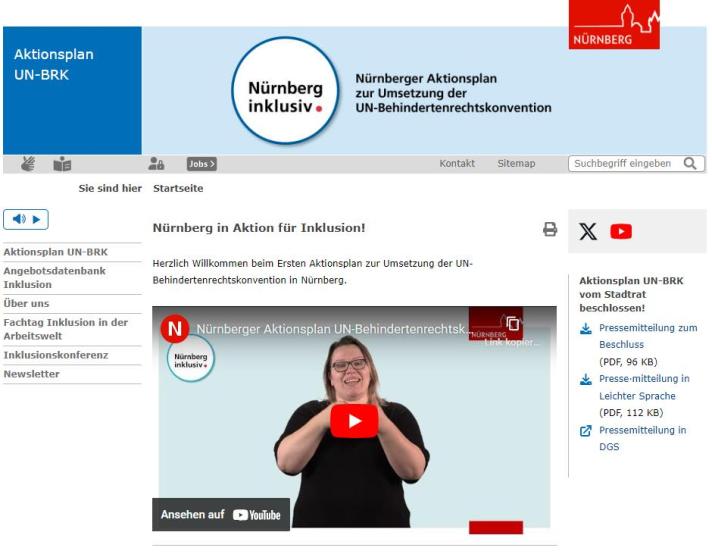
Nuremberg’s action plan for inclusion
A landmark moment for the city was the adoption of the First Nuremberg Action Plan to Implement the UN Convention on the Rights of Persons with Disabilities in 2021. This comprehensive plan includes over 270 measures across eight fields of action, with 187 already implemented. The Inclusion Coordination Group, established by the Mayor, oversees these efforts, ensuring that every city department prioritises inclusion. Regular conferences, working groups and the city’s Disability Council – comprised of 40 members, including 26 with disabilities – drive these initiatives forward.

Cultural and social initiatives
Nuremberg’s vibrant cultural scene reflects its inclusive spirit. Projects such as the Theatre Dreamteam, comprising actors with and without disabilities, and the EveryBody Festival, showcasing inclusive art, enrich the city’s cultural landscape. The city’s largest provider for adults with disabilities, noris inklusion gGmbH, offers services ranging from housing and education to leisure and work opportunities.

Ongoing collaboration and awareness raising
The Disability Council plays a pivotal role in ensuring that all accessibility projects reflect the needs of the community. An annual dialogue with the Lord Mayor facilitates continuous feedback and improvement. The city’s Disposal Fund supports inclusive projects across departments, promoting long-term sustainability. Additionally, regular newsletters and outreach efforts keep the community informed and engaged.
3rd prize Cartagena, Spain
221,364 inhabitants

With a history spanning over 3,000 years, Cartagena is a dynamic port city that seamlessly blends its rich heritage with cutting-edge accessibility initiatives. Its pedestrian-friendly old town, adorned with neoclassical and modernist architecture, offers a welcoming environment for all visitors. The city’s lively cultural calendar, featuring highlights such as Easter celebrations, the Carthaginians and Romans Festival, and the La Mar de Músicas Festival, is thoughtfully designed to include everyone, regardless of ability.
Accessibility in a city like Cartagena is essential to ensure that all individuals, regardless of their physical or mental abilities, can fully participate in urban life. An accessible city promotes autonomy and social inclusion, enabling people with disabilities or temporary mobility difficulties to navigate the urban environment with ease and safety. Recognising this, the City Council of Cartagena incorporates accessibility criteria into all municipal projects and initiatives it undertakes, while also promoting the city’s sustainable development.
Cristina Mora Menendez de la Vega, Councillor for the Department of Social Policy, Equality and Family, Cartagena City Council
Urban accessibility and inclusive infrastructure
Cartagena’s commitment to accessibility is evident in its urban landscape. Guided by strategic plans like the Urban Agenda and the Cartago Sustainable Urban Mobility Plan, the city prioritises barrier-free public spaces. Initiatives include pedestrian-friendly zones with single-level surfaces and adapted parks and beaches, ensuring that all residents and visitors can navigate the city with ease. Special emphasis is placed on cognitive accessibility, exemplified by the pictograms and easy-to-understand information provided by the Department of Social Policy building – the first in Murcia to offer this feature.

Accessible transport solutions
The city’s smart transport infrastructure sets a benchmark in inclusivity. Collaborating with ONCE, Spain’s national organisation for persons with visual impairments, Cartagena has introduced smart pedestrian crossings and audible traffic signals. Smart bus shelters equipped with augmented reality and audible announcements enhance the experience for passengers with visual and cognitive impairments. Additionally, a system for indicating free parking spaces for people with reduced mobility in the city centre and Low Emission Zones further bolsters accessibility.

Inclusive tourism and cultural initiatives
Cartagena aspires to become the capital of accessible tourism in the Mediterranean. Its award-winning ‘Beach for All’ initiative provides assisted bathing services with amphibious equipment and trained staff, having served over 500 individuals in 2024 alone. Major cultural events such as the Three Kings Parade, Easter celebrations, and the Carthaginians and Romans Festival reserve dedicated spaces for persons with disabilities, ensuring an inclusive experience for all. The city is also developing immersive technologies to allow individuals who cannot physically attend events, such as Holy Week processions, to experience them virtually.

Technological innovations and digital accessibility
The city’s digital infrastructure reflects a strong commitment to accessibility. Cartagena’s municipal website ranks among the most accessible in Spain, and tourist information is available in Braille, augmented reality, and AI formats. The city’s Technical Office for Accessibility, the first of its kind in the region, works closely with disability groups to audit and enhance these efforts.

Participation and collaboration
Collaboration with the community is central to Cartagena’s accessibility strategy. The Municipal Disability Plan, developed in partnership with 40 disability organisations, ensures that policies are both inclusive and impactful. The city’s Municipal Commission for Accessibility oversees the implementation of these measures, involving stakeholders in all aspects of urban planning and service delivery. Residents can easily communicate their needs through established channels, fostering a responsive and adaptive
Special mention for accessible sports infrastructure Nuremberg, Germany
544,414 inhabitants

Renowned for its rich history and vibrant cultural scene, Nuremberg has distinguished itself in the field of accessibility with a strong focus on sports. In the 2025 Access City Award, Nuremberg not only secured second place but also received a Special Mention for Accessible Sports Infrastructure, exemplifying how sports can foster inclusion and equality. Its dedication to this cause was especially prominent during the 2023 ‘Year of Inclusion in Sport’, demonstrating the city's ongoing commitment to creating a more accessible future.
This recognition is a great incentive for us. Accessibility in sport means more than simply removing barriers – it is about providing everyone with the opportunity to actively participate, enjoy a sense of community, and engage in exercise. We would like to thank all those who are dedicated to the inclusion process in Nuremberg and who have made these awards possible. We are proud to be consistently advancing the path towards greater participation in sport in Nuremberg!
Cornelia Trinkl, Deputy Mayor for Schools and Sport
Fostering inclusion through sports
Nuremberg’s efforts were showcased during its involvement in the 2023 Special Olympics World Games, where the city hosted the Austrian delegation. This event was not just a milestone but a catalyst for sustained partnerships. Sports clubs, schools, and disability organisations collaborated to create a lasting network that continues to promote inclusive sports opportunities across the city.

Financial support for accessible programmes
Since 2020, the city has provided an annual grant of €20,000 to sports clubs. This funding supports a wide range of inclusive initiatives, from purchasing adaptive equipment, such as wheelchair basketball gear, to financing construction projects and specialised training programmes. Inclusive swimming groups and wheelchair basketball projects are just some of the many programmes made possible through this support, benefiting individuals with diverse needs.

Institutional commitment and future plans
Nuremberg’s dedication to accessibility extends beyond individual projects. In August 2024, the city established a permanent position focused on ‘Inclusion through Sport’. This role will ensure that accessible sports remain a priority in municipal planning, reflecting the city's long-term vision for inclusion.
Collaboration and community involvement
Collaboration with key organisations, such as the Behinderten- und Versehrtensportverein (BVSV) Nürnberg e.V., plays a crucial role in Nuremberg’s strategy. This partnership enhances accessibility and ensures that the voices of persons with disabilities are heard and integrated into decision-making processes, further strengthening the city’s inclusive sports infrastructure.
Special mention for role model in the built environment and transport Borås, Sweden
114,000 inhabitants

Nestled in Sweden’s western region, Borås is renowned for its rich textile heritage and commitment to environmental sustainability. This dynamic city, with its rugged landscapes and diverse demographics, has earned a reputation for progressive urban development. Borås’s dedication to inclusivity and accessibility has been recognised with a Special Mention for Role Model in the Built Environment and Transport at the 2025 Access City Award.
In the City of Borås, accessibility and inclusion are fundamental cornerstones of everything we do. All residents, regardless of their abilities, should have equal rights and opportunities to participate fully in community life. There is broad political consensus on building a city where no one is left behind. By listening to the experiences and needs of people with disabilities, we can work together to create a more accessible and inclusive Borås.
Ylva Lengberg, Lead City Councillor
Integrating accessibility into urban planning
Borås has established itself as a leader in accessibility by exceeding national standards and integrating inclusive design principles into all urban planning and construction projects. The city’s guidelines ensure that accessibility is considered from the earliest stages of development, promoting universal design and removing barriers. This forward-thinking approach aims to create an urban environment where all residents can participate equally in society.

Accessible public transport
Key highlights include the city’s innovative approach to accessible public transport, where it was one of the first in Europe to implement raised bus boarding platforms before legal requirements for low-platform buses.
Borås has continued to enhance its public transport system with tactile markings at bus and train stations and accessible screen and sound systems on local buses for persons with hearing and visual impairments. The city’s procurement policies mandate disability awareness training for bus drivers, emphasising interaction and support for passengers with physical and cognitive disabilities.
Innovative tools and initiatives
A key initiative in Borås’s strategy is the Accessibility Database, which provides detailed information on the accessibility of more than 300 public places and services. This resource helps residents navigate the city more effectively and ensures transparency in accessibility standards.

In addition, during election years, the city inventories all polling stations and develops educational materials for election workers to guarantee accessible voting processes.

Inclusive recreational spaces
Borås has also focused on making public recreational areas more inclusive. Recent playground renovations feature companion swings, park benches with armrests, and picnic tables with extended tabletops, enabling people of all abilities to enjoy these spaces comfortably.

A national and international role model
Borås’s accessibility initiatives have garnered national acclaim, frequently cited as a model of good practice across Sweden. The city’s work on early-stage planning, the Accessibility Database, and inclusive design has made it a sought-after lecturer at municipal and architectural conferences. Borås actively participates in regional networks and collaborates with the National Agency of Participation.
Internationally, Borås extends its expertise beyond borders. The city has engaged in a three-year collaboration with Vračar, Serbia, and regularly shares its insights at conferences in Norway. Borås’s efforts have also been recognised with prestigious awards, including the European Design for All Award in 2019 and the International Award for Universal Design in 2020.